
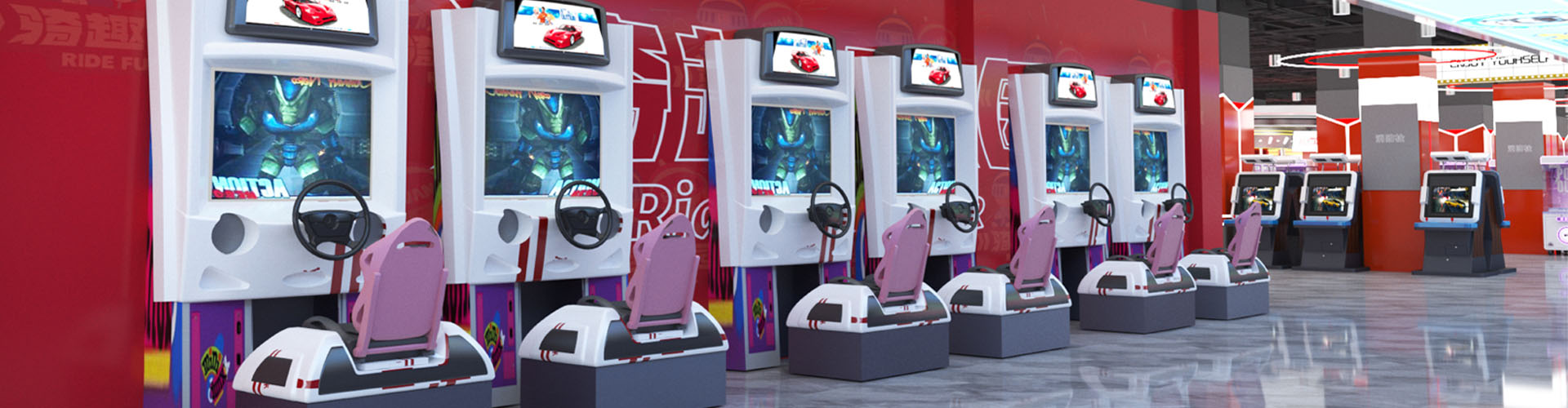
Claw machines, also known as crane machines, can be found in arcades and family entertainment centres all over the world. They are very popular because of their unique, simple design, aiming to balance the excitement of the players and the profitability of the operators. Understanding how claw machines work and why they continue to generate steady revenue helps arcade owners and investors make smarter purchasing and operating decisions.
The claw machine is basically a game of skill and is a machine that challenges the player to attempt to grab a prize from the machine using a mechanical claw. Players will insert their money, select the joystick or buttons to move the claw over the desired prize and subsequently press the button to drop the claw in an attempt to grab the prize.
The mechanical systems of the claw machine consist of a rail system and a motorized system to control the horizontal/vertical movements of the claw. The claw is powered by a spring or other adjustable tension system, allowing the operator to control the gripping force when the claw grabs the prize. The entire mechanical systems are then controlled by an internal logic control board.
The claw machines today are completely electronic, providing operators with the ability to fine-tune all the parameters related to how the claw operates, such as claw strength, drop rate, time limit, and payout frequency, thus allowing for a consistent operation while also providing players with a fair and entertaining experience.
Operators can program claw machines to ensure that they apply maximum grip strength after a minimum of a number of plays performed by the player. While this does not guarantee the player will win every time, it does help to create predictability in revenue while ensuring that the average player will be able to achieve a win for an ongoing, consistent level of gaming interest.
The layout of the prizes on a claw machine is critical to the operation of the machine. Prizes are usually laid out in such a way that they appear to be easy to win, thus enticing the average player to try “just one more play.” Bright lights, clear glass cabinets, and visually appealing prizes all help attract attention to the claw machine and increase play frequency.
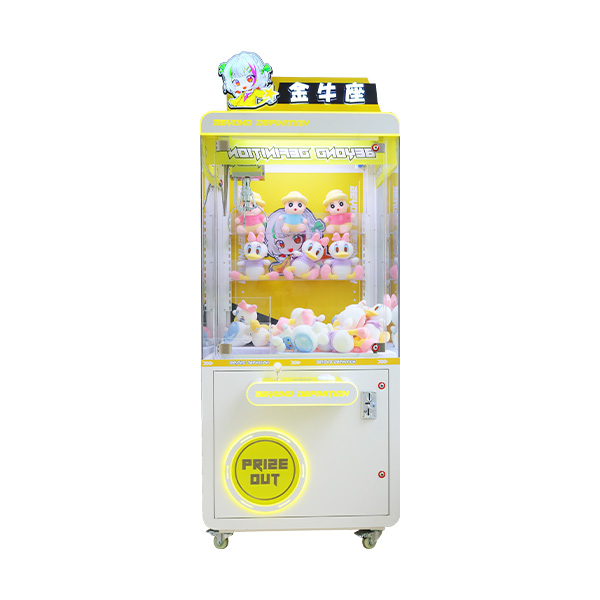
Claw machines have become very popular with operators due to the extremely high level of return on investment that they generate relative to the amusement industry.
Claw machines have very low maintenance and power consumption costs compared to larger video arcade cabinets or ride-on machines. They take up very little footprint space on the floor and can be operated continuously without requiring supervision.
Compared to video games, players tend to perceive a claw machine as offering much greater perceived value due to the fact that they can win a physical prize. Even small plush toys or novelty items provide a greater sense of reward compared to the electronic score on video games; therefore, players are likely to play again.
Arcade operators can attain profitability through the selection of different prize cost levels. Low-cost plush toys or key chains can be purchased in bulk and still be perceived by the players as valuable. Consequently, operators can make it easy to adjust margins to maximize profitability by utilizing a flexible prize cost structure.
Claw machines appeal to impulse players because of their bright colors, visible prizes, and easy-to-play design. Players do not need to have gaming skills to play the game; therefore, they appeal to large cross sections of the population.
Operators are able to quickly adjust the price per play, win ratios and difficulty of winning based on location performance. In high-traffic areas, operators may choose to use higher pricing and tighter settings; whereas, in family-friendly locations, operators may choose to use lower prices and looser settings in order to increase customer satisfaction with frequent wins.
Claw machines offer a combination of mechanical precision, programmable control systems, and player psychology to create a fun, exciting, and profitable experience. Their low operating costs, flexible prize structures, and strong impulse appeal make them one of the most profitable machines for amusement and entertainment operators. For operators looking to maximize revenue with minimal risk, claw machines remain a proven and highly effective investment.