
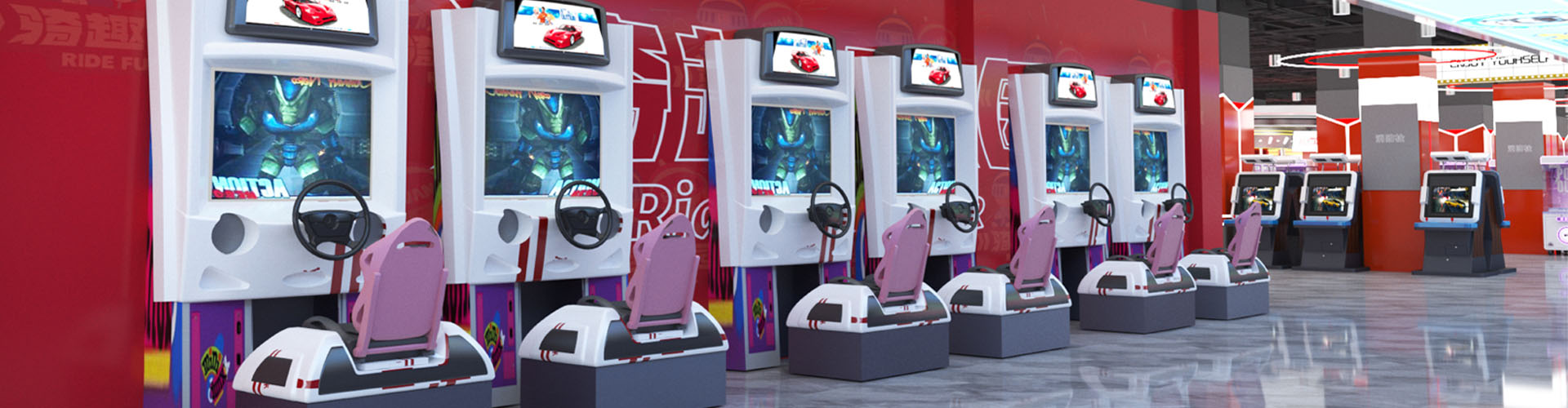
If you’ve walked through a family entertainment center, you’ve seen the crowd — coin pushers clicking, ticket dispensers whirring, kids racing to trade tickets for a stuffed animal. That’s the redemption game machine at work. It’s one of the few arcade categories where the payout itself is the attraction. This guide breaks down how these machines function, what they cost, and how to pick one that actually earns its floor space.
A redemption game machine is any arcade unit that rewards players with tickets, points, or tokens redeemable for prizes — rather than just a high score. Think skee-ball, coin pushers, basketball hoops, and spinning wheel games. The mechanic varies, but the reward loop is the same: play, win tickets, trade up.
This is different from a claw machine, where the prize is dispensed directly. Redemption machines create a delayed gratification loop, which tends to keep players on the floor longer and encourages repeat visits — a detail that matters more to operators than casual players realize.
Most units use a programmable payout ratio, meaning the operator sets how many tickets or points a win generates relative to the coin-in. This ratio directly controls the machine’s profit margin, so it’s not something to leave on factory default without checking local competition and player expectations.
Some newer machines use point cards or app-linked accounts instead of paper tickets, cutting down on jammed dispensers and paper waste. Both systems achieve the same goal — they just differ in maintenance overhead and player experience.
| Feature | Ticket-Based | Point Card / App-Based |
|---|---|---|
| Physical wear | Higher (mechanical dispenser) | Lower |
| Player nostalgia factor | Strong | Weaker |
| Data tracking for operators | Limited | Detailed |
| Setup complexity | Simple | Requires system integration |
Pricing depends heavily on cabinet size, mechanical complexity, and whether it’s a licensed theme or a generic build — so treat any number you see online as a starting reference rather than a quote. Simpler units like mini skee-ball or coin pushers sit at the lower end, while large-format ticket redemption machines with animatronics or multiplayer setups cost considerably more.
Buying factory-direct, rather than through a regional distributor with markup layers, is usually where the real savings show up. For us, that’s part of why factory pricing gets offered directly — it removes a markup step that otherwise gets passed to the operator.
Two identical cabinets, placed in different locations, can produce very different revenue — and the reason usually isn’t the machine itself. It’s foot traffic pattern, prize perceived value, and how visible the machine is from the entrance. A redemption game hidden in a back corner will underperform no matter how good its payout logic is.
Common revenue-limiting factors include:
Small adjustments to placement or payout tuning often move the needle more than swapping the machine entirely.
Before signing off on any unit, operators should confirm a few practical details that get overlooked in the excitement of picking a fun cabinet design. Ask specifically about the control board’s stability under continuous daily use — this is where cheaper builds tend to fail first, not in the cabinet shell.
It’s also worth checking whether the supplier tests machines in a live operating environment before shipping, not just on a factory bench. A unit that’s only been bench-tested can behave differently once it’s running twelve hours a day under real coin volume.
Profitability isn’t a one-time setup decision — it’s an ongoing maintenance habit. Dispenser jams, worn sensors, and outdated prize stock are the three most common reasons a once-profitable machine quietly starts losing money.
Regular checks should cover:
Access to spare parts matters more here than most buyers expect, since a two-week wait for a replacement sensor can mean two weeks of an idle, revenue-losing cabinet.
FAQ
Does a redemption game machine need constant supervision? No, but it does need routine mechanical checks — most issues come from wear, not misuse.
Can one machine type suit any venue size? Not really. Compact skee-ball works in tight spaces; multiplayer ticket machines need open floor space to justify their footprint.
Whether you’re setting up a single unit or planning a full arcade floor, understanding how a redemption game machine earns — and where it can quietly lose money — is the difference between a decorative cabinet and a working asset.