
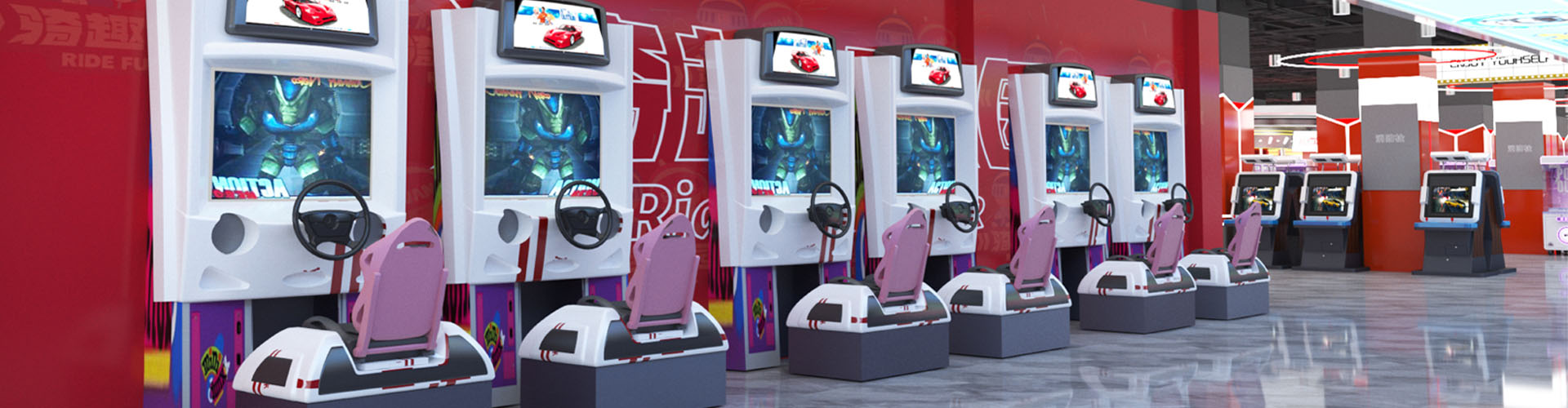
Anyone who has waited in line at a game center on a Saturday afternoon knows the real friction point isn’t the games — it’s getting tokens into your hand. An arcade token machine exists specifically to remove that bottleneck, converting cash, QR codes, or mobile payments into the correct token count without a cashier standing between the player and the fun. But the interesting part isn’t that it accepts money. It’s how it decides how many tokens to release, and why that decision has to be nearly instant and nearly error-free.
A staffed coin booth is a queue by design. One person counts, makes change, and hands over tokens one transaction at a time. During peak hours — school holidays, weekend afternoons — that single point of contact becomes the slowest part of the entire venue. Operators lose throughput, and players lose patience before they’ve even touched a joystick.
An automated token dispenser removes the human step entirely. The transaction and the payout happen in the same machine, at the same moment, with no waiting for someone to be free.
This is the part worth understanding, because it’s where reliability either holds up or falls apart. When a bill validator, QR scanner, or mobile payment reader confirms a transaction, it doesn’t just open a gate — it sends a verified amount to a small onboard controller. That controller applies a preset conversion rate and calculates exactly how many tokens should be released.
The dispensing itself typically relies on a coin hopper mechanism, a design borrowed from decades of vending machine engineering. As tokens drop, an optical sensor counts each one individually, rather than trusting the motor’s spin time alone. This matters more than it sounds: if a token jams or two tokens stick together, time-based dispensing would silently over- or under-pay. Sensor-based counting catches that discrepancy in real time and corrects for it before the transaction closes.

The digital display confirming the paid amount against the dispensed count isn’t decorative. It’s the operator’s and the player’s shared proof that the math matched.
Software logic only matters if the hardware around it survives daily commercial use. This type of unit typically weighs somewhere in the 50–120 kg range depending on configuration, with a compact upright footprint — roughly 45 cm deep, 41 cm wide, and 167 cm tall on the model referenced here.
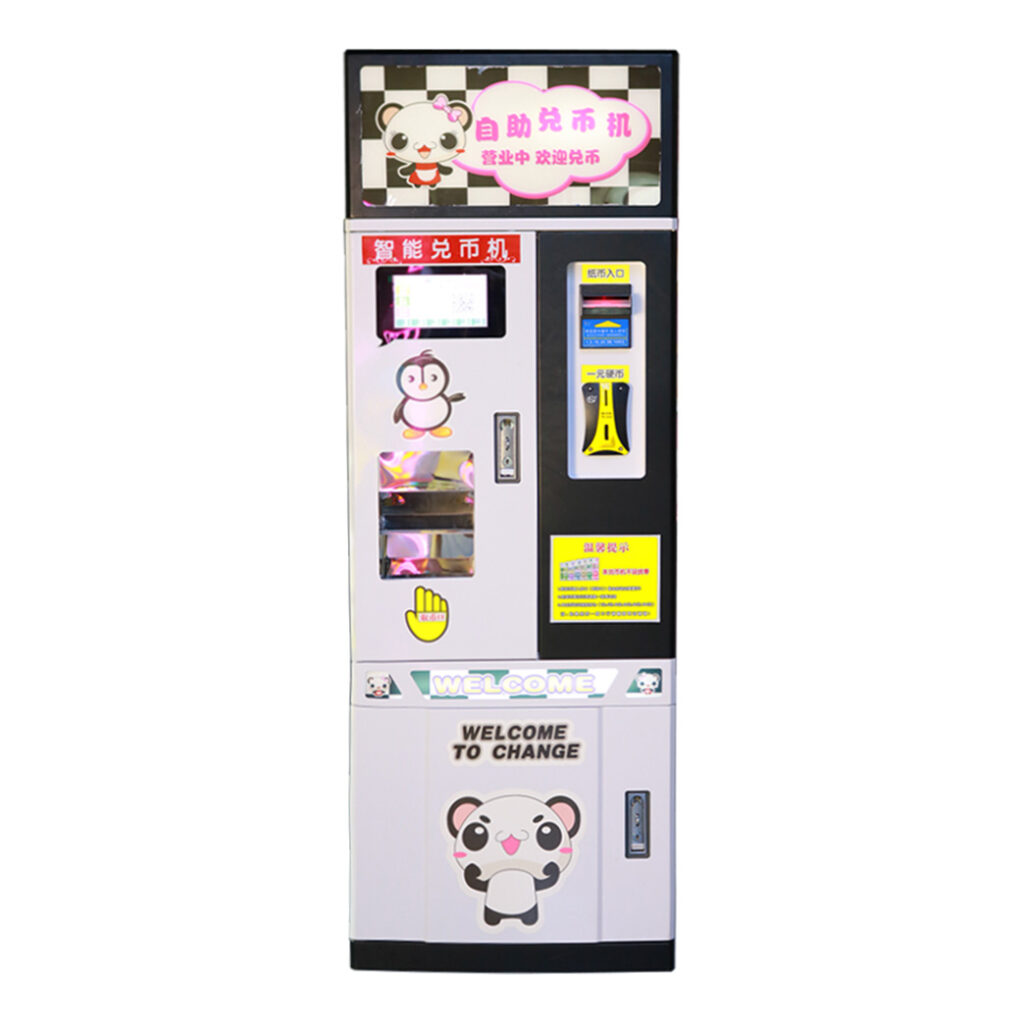
That narrow footprint is deliberate. It fits against a wall or near an entrance without eating into game floor space, while still housing a sturdy internal frame that resists the physical wear of hundreds of daily transactions. Token storage is also enclosed behind a security panel, which limits tampering risk in a venue where the machine may run unattended for hours.
| Specification | Typical Range |
|---|---|
| Power Consumption | 65W – 240W |
| Voltage | 220V / 110V |
| Weight | 50kg – 120kg |
| Player Capacity | 1 person per transaction |
A single-person-capacity unit works well in most family entertainment centers and indoor playgrounds, where transactions are quick and spread throughout the day. Higher-traffic arcade centers, especially ones near ticket redemption counters or prize-machine zones, often benefit from placing two units side by side to prevent queuing during peak windows — the same logic that governs ATM placement in busy retail spaces.
Does a token machine remove the need for staff entirely?
Not entirely. It removes staff from the transaction step, but venues still need someone available for refunds, jammed bills, or maintenance. Think of it as reassigning labor rather than eliminating it.
Can damaged bills or fake QR codes trick the system?
Bill validators reject bills that fail optical and magnetic checks rather than guessing, and QR/mobile payments are verified against the payment provider before any token is released — so a failed check simply returns no tokens, not incorrect ones.
Getting an arcade token machine right isn’t about flashy lighting or a bigger screen. It’s about the quiet reliability of a calculation happening correctly thousands of times a week. For us, that’s exactly why these units are run in our own operating stores before they ever reach a client floor — because a token dispenser that miscounts, even occasionally, costs more in refunds and distrust than it ever saves in labor.